
Pet Travel
Dog Tapeworm Treatment Before Travel: The 24–120 Hour Rule
For several European destinations, a dog's tapeworm treatment is not simply something to finish “before the trip.” A veterinarian must administer and document it inside a precise window measured backward from scheduled entry.
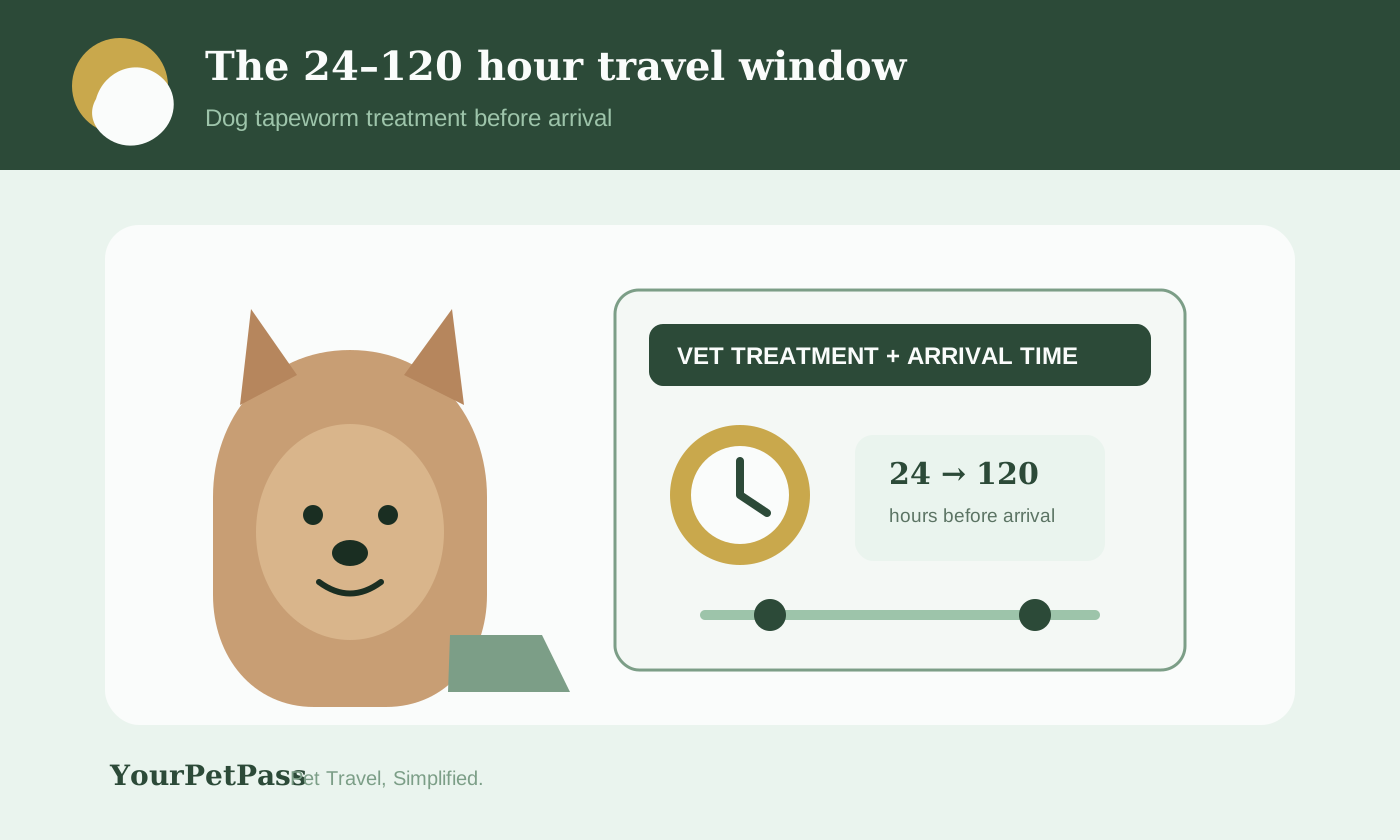
The short answer
- Dogs—not cats or ferrets—need treatment against Echinococcus multilocularis before entry to Finland, Ireland, Malta, Northern Ireland and Norway when an exemption does not apply.
- The veterinarian must administer the treatment no less than 24 hours and no more than 120 hours before scheduled entry.
- Great Britain also requires dogs arriving from most countries to have an effective tapeworm treatment in the same 24–120 hour window.
- The clock is tied to arrival/entry time, not flight departure. Treatment can be too early as well as too late.
Direct answer: calculate the appointment from the dog's scheduled border-arrival time. The earliest compliant treatment is 120 hours before entry; the latest is 24 hours before entry. Do not calculate from when you leave home or when the first flight departs.
Which destinations use this rule?
| Destination | Core rule |
|---|---|
| Finland, Ireland, Malta, Northern Ireland | Dogs: veterinary treatment 24–120 hours before scheduled entry, subject to exemptions. |
| Norway | Dogs, including puppies: treatment 24–120 hours before entry, subject to exemptions and other options for qualifying frequent travel. |
| Great Britain | Dogs arriving from most countries: treatment 24–120 hours before entry. Direct arrivals from Finland, Ireland, Northern Ireland, Malta or Norway are exempt. |
| Cats and ferrets | This dog-specific Echinococcus treatment rule does not apply. |
How to calculate the window
Start with the dog's scheduled arrival time at the destination border and count backward. The treatment must fall between 24 and 120 hours before that time.
A calendar date alone is therefore not enough. The veterinarian's recorded time matters, and a late itinerary change can move an otherwise valid treatment outside the window.
What the veterinarian needs to document
European Commission guidance requires an approved veterinary medicinal product containing an appropriate dose of praziquantel, or another proven active substance effective against Echinococcus multilocularis. Treatment must be administered by a veterinarian and certified in the relevant travel document.
For Great Britain, owners are told to check that the document contains the product name and manufacturer, treatment date and time, and the veterinarian's stamp and signature. Norway likewise requires veterinary administration and certification in the relevant health certificate or pet passport.
Free to start — organize your dog's travel records →
What changes your answer?
- Species: this requirement applies to dogs, not cats or ferrets.
- Origin: direct movement among certain listed countries can qualify for an exemption.
- Destination: Great Britain has its own regime; Finland, Ireland, Malta and Northern Ireland use the EU/NI framework; Norway publishes its own implementation.
- Arrival time: a delay can push the dog beyond 120 hours after treatment.
- Frequent travel: Norway has a separate 28-day treatment option for qualifying repeated EU/EEA travel with specific setup and documentation rules.
The flight-delay trap
A delay does not automatically invalidate treatment. The question is whether the dog will still enter within 120 hours after the veterinarian administered it. If revised arrival falls outside the permitted window, another treatment may be required before entry. Great Britain's official guidance specifically warns that a delay beyond 120 hours may require a new treatment.
A five-step pre-travel check
- Confirm the destination rule on the responsible government's current page.
- Write down scheduled arrival, including local date and time.
- Calculate both boundaries: subtract 120 hours and 24 hours.
- Book inside the window, leaving sensible margin for itinerary changes.
- Inspect the documentation for the required product information, date, time and veterinary certification.
FAQ
Can I give the travel tapeworm treatment myself?
No. The official travel rules described here require veterinary administration and documentation.
Is the rule five days before departure?
No. It is measured against scheduled entry: no more than 120 hours and no less than 24 hours beforehand.
Does my cat need this treatment?
No. This Echinococcus travel-treatment requirement is dog-specific.
What if the flight is delayed past 120 hours?
The treatment may no longer satisfy the entry window. Check the responsible destination authority and your veterinarian promptly; another treatment may be needed.
Do dogs traveling directly from Ireland to Great Britain need treatment?
GOV.UK says dogs coming directly to Great Britain from Finland, Ireland, Northern Ireland, Malta or Norway do not need this tapeworm treatment.
Primary sources
- European Commission — Bringing a Pet Into the EU From a Non-EU Country
- European Commission — Dogs, Cats and Ferrets FAQs
- GOV.UK — Bringing a Pet to Great Britain: Tapeworm Treatment for Dogs
- Norwegian Food Safety Authority — Travelling to Norway From Third Countries
Sources reviewed September 24, 2026. Pet-entry rules can change. Verify the current rule for your dog's origin, destination and route before travel.
Keep the treatment timestamp with the trip.
When a travel rule is measured in hours, the itinerary and veterinary record belong together. YourPetPass helps keep vaccination history, treatment records, microchip details and travel documents organized for the route ahead. One app for every trip and every vet visit.
Start YourPetPass free →