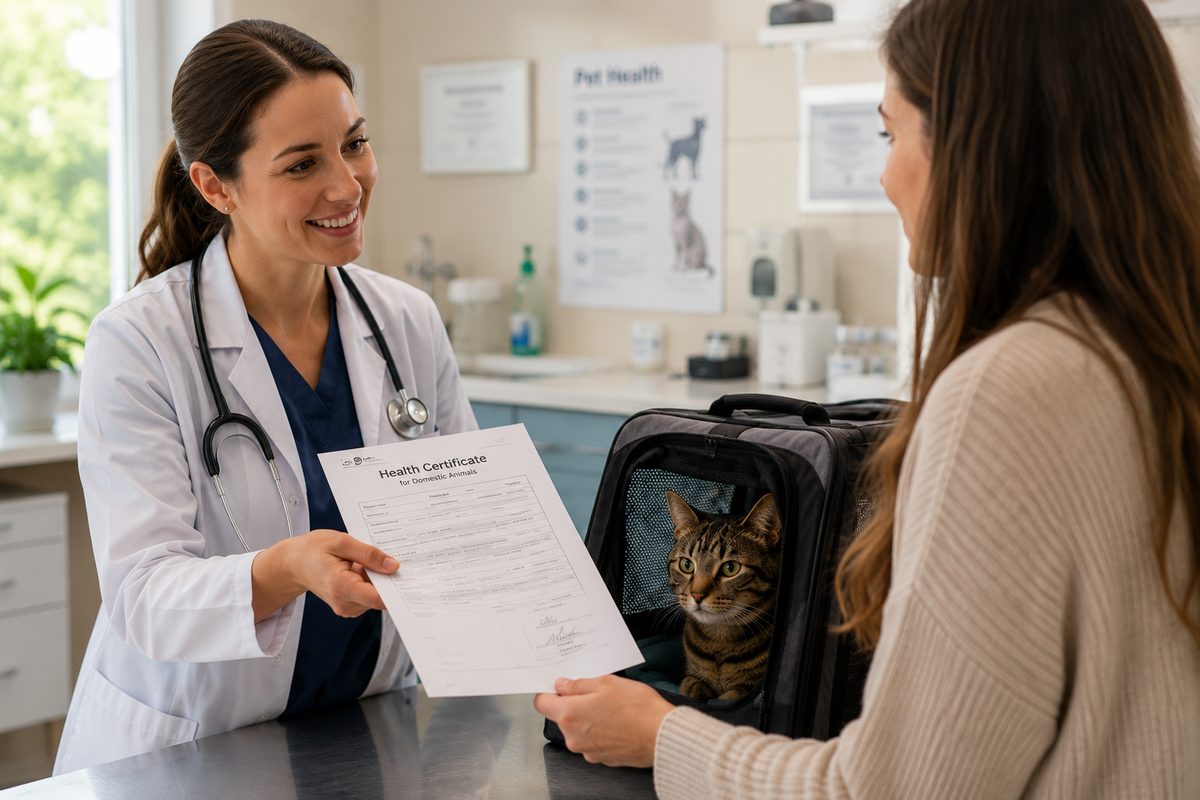
A pet health certificate is a veterinary document confirming that your pet meets the health requirements for a specific trip. For international travel, it is often called an international health certificate, veterinary health certificate, or export certificate.
What does a pet health certificate actually confirm?
The exact form varies, but a certificate usually documents some combination of your pet's identity, vaccination history, examination results, testing, treatments, and the veterinarian's certification that the requirements for the trip have been met.
That is why a health certificate should not be treated as a generic “fit to fly” note. The form and supporting records need to match the rules for your destination.
Who can issue one?
A veterinarian issues the certificate after examining your pet and verifying any required vaccines, tests, or treatments. For many international trips departing the United States, the destination may also require USDA APHIS endorsement. When USDA endorsement is required, the veterinarian issuing the certificate must be USDA-accredited.
Do you always need USDA endorsement?
No. The destination country decides whether USDA endorsement is required. Some destinations accept a veterinarian-issued certificate without USDA endorsement, while others require USDA to review and endorse the certificate after the accredited veterinarian completes it.
For domestic U.S. travel, requirements are generally set by the receiving state or territory rather than by USDA APHIS. Your destination may still require a certificate of veterinary inspection, vaccinations, tests, or other documentation.
When should you start?
Start as soon as you know where you are going. Some trips are simple; others can require weeks or months of preparation because of vaccination waiting periods, blood tests, import permits, treatments, or other destination rules.
The final health certificate itself may have a much shorter validity window. In other words, you may need to begin the process months ahead even though the certificate cannot be issued until close to departure.
A simple planning sequence
- Confirm the destination rules.
Use the official government requirements for the country, state, or territory your pet is entering. - Check your pet's existing records.
Verify microchip information, rabies documentation, other vaccines, test results, and previous certificates. - Work backward from your departure date.
Identify any waiting periods and the exact window in which the final exam and certificate must occur. - Use the right veterinarian.
If USDA endorsement is required, make sure the veterinarian is USDA-accredited and familiar with the destination's process. - Keep the supporting documents together.
A certificate may need to be accompanied by vaccination records, laboratory results, permits, or other evidence. - Re-check shortly before travel.
Pet-entry rules can change. Confirm the official requirements again before the certificate is issued and before you leave.
Common mistakes that cause problems
- Using an old certificate from a previous trip.
- Assuming the airline's paperwork is the same as the destination country's entry paperwork.
- Scheduling the veterinary appointment before understanding the certificate's validity window.
- Discovering too late that a required vaccine, test, or treatment has its own waiting period.
- Leaving supporting records at home because the health certificate seems complete by itself.
- Relying on an unofficial travel blog when the destination government has updated its rules.
Keep the paperwork with you
Your pet's health history belongs with you. YourPetPass keeps vaccines, medical records, certificates, and travel documents organized in one place so you can find them at the vet, at the airport, or at the border.
Free to start at YourPetPass.com