
Pet Travel
Pet Microchips for International Travel: Why Timing Before Rabies Vaccination Matters
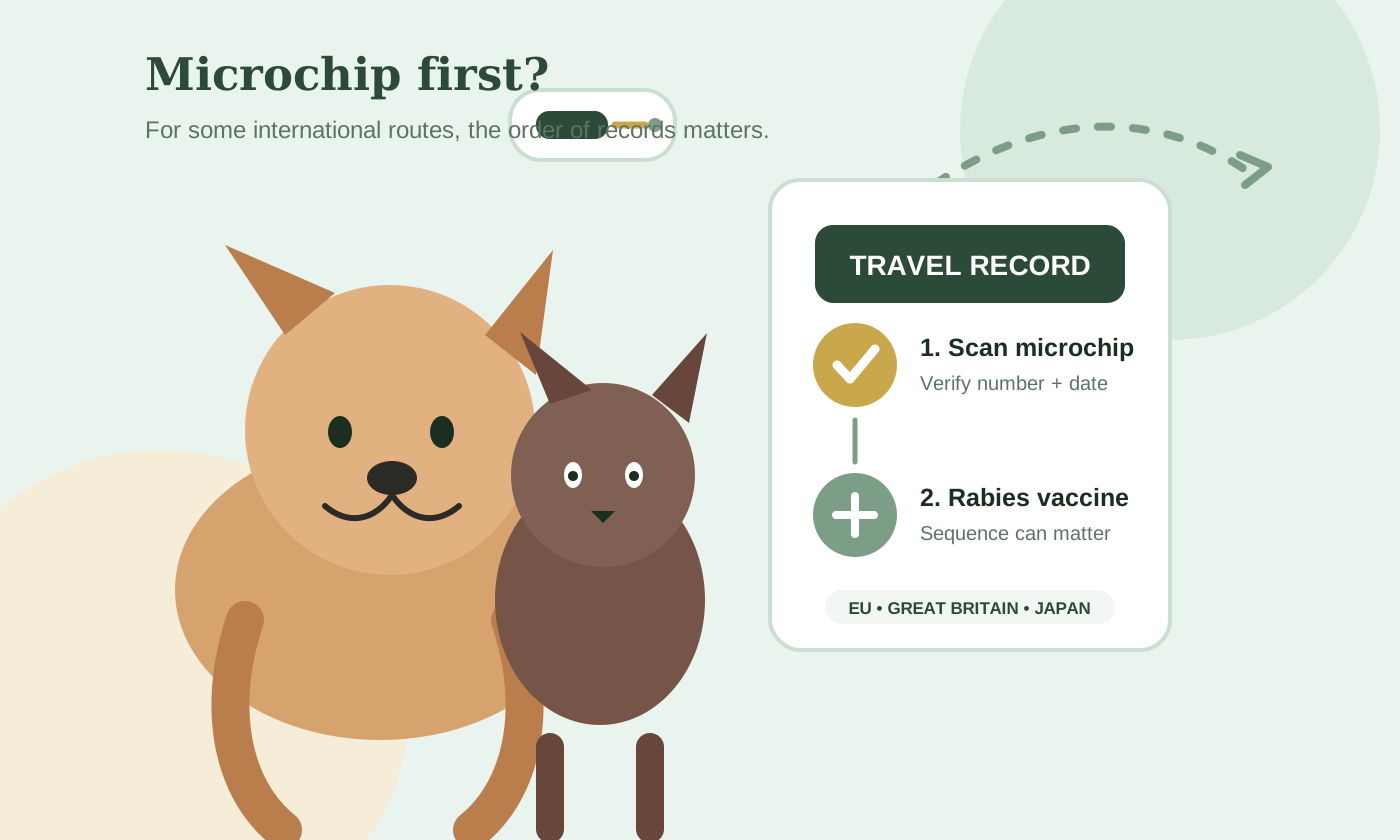
For many international routes, having a microchip is only part of the requirement. The chip may need to be implanted—or at least scanned and verified—before the rabies vaccination used for travel. Get the order wrong and an otherwise current rabies shot may not count.
The short answer
- Microchip rules are destination-specific; not every country uses the same standard or sequence.
- The EU requires the rabies vaccination used for travel to be given after the pet has been microchipped.
- Great Britain requires microchipping before, or at the same time as, rabies vaccination.
- Japan's non-designated-region process requires microchip identification before the first rabies vaccination.
- Do not record only the microchip number. Keep the chip date, scan history, rabies dates and certificate together.
Direct answer: before relying on a rabies vaccination for international travel, verify the destination's microchip rule and the order of events. On routes such as the EU, Great Britain and Japan, identification and rabies vaccination are linked. A chip added later can mean repeating vaccination—and sometimes restarting later testing or waiting periods.
Why microchip timing can change the whole travel timeline
A microchip gives the pet a stable identification number that can be matched to vaccination, laboratory and health-certificate records. Some governments make that sequence part of the legal travel requirement.
The European Union states that, for a rabies vaccination to be valid for travel, the pet must have been microchipped before the vaccination is given. Great Britain says the microchip must be implanted before, or at the same time as, rabies vaccination. Japan's process for dogs and cats from non-designated regions requires microchip identification before the first rabies vaccination.
Three official examples
| Destination | Microchip + rabies sequence | What can go wrong |
|---|---|---|
| European Union | For travel validity, the rabies vaccination must not precede identification or reading of the microchip. EU consumer guidance states the pet must be microchipped before rabies vaccination. | A rabies shot given before valid identification may not qualify for the trip. |
| Great Britain | The pet must be microchipped before, or at the same time as, rabies vaccination. | GOV.UK says a pet vaccinated before microchipping will need to be vaccinated again. |
| Japan | For dogs and cats from non-designated regions, microchip identification must come before the first rabies vaccination. | The sequence is foundational to the later two-vaccination, titer and 180-day process. |
These examples show why there is no safe universal shortcut. USDA APHIS likewise advises U.S. travelers to determine the destination's exact requirements early because countries may require specific microchips, vaccinations, tests and treatments.
Free to start — organize your pet's travel records →
What does “ISO-compliant microchip” mean?
Many international travel programs use microchips that comply with ISO 11784 and ISO 11785. Great Britain says compliant chips can be read on approved travel routes and warns that travelers with a non-ISO chip may need to provide a compatible reader. Japan's Animal Quarantine Service says the chip for its non-designated-region process should comply with ISO 11784 and 11785 and use a 15-digit numeric code.
USDA guidance for Great Britain similarly describes ISO-compliant travel microchips as 15 digits long and meeting ISO 11784/11785 standards.
What should your veterinarian verify?
- Scan the chip. Confirm it is readable before relying on the number already written in old records.
- Match the number. The microchip number on the rabies certificate, lab report and health certificate should identify the same pet.
- Check the identification date. For routes with sequencing rules, confirm the chip was implanted or read at the required point before vaccination.
- Check rabies continuity. A booster lapse can create a new primary-vaccination timeline even when the chip itself is fine.
- Confirm destination-specific standards. Determine whether ISO compatibility, a reader, a second chip or special documentation is required.
What if the microchip cannot be read?
This is not merely an equipment inconvenience. Great Britain's official guidance says that if a veterinarian cannot read the chip, the pet may need to be rechipped, revaccinated, retested where applicable and issued new travel documentation. Required waiting periods can then apply again.
That is a strong reason to have the chip scanned well before the final health-certificate appointment, especially for travel plans involving rabies titers or long statutory waiting periods.
What if my pet already has a non-ISO chip?
Do not immediately assume it must be removed or replaced. Rules vary. Great Britain notes that a traveler with a non-ISO chip may need a reader capable of reading it. USDA guidance for EU travel also notes that, on relevant routes, a veterinarian may implant a second ISO-compliant chip and list both numbers on the health certificate.
The correct choice depends on the destination. If a second chip is implanted, preserve records for both numbers so later certificates do not create an identity mismatch.
The record set worth saving together
- Microchip number
- Microchip manufacturer or standard, if known
- Implantation date and/or verified scan date
- Rabies vaccination certificate
- Primary vaccination and booster dates
- Rabies titer report, when required
- Health certificate and USDA endorsement, when applicable
- Any record showing a second or replacement microchip
A practical pre-travel microchip check
- Open the destination government's current pet-entry rules.
- Find the identification or microchip section.
- Confirm the required standard and whether the chip must precede rabies vaccination.
- Have your veterinarian scan the chip and confirm the number.
- Compare that number against the rabies certificate and any titer report.
- If the sequence is wrong, rebuild the schedule before booking around certificate deadlines.
- If a titer is required, continue with our rabies titer timing guide.
- Before the final certificate visit, use our USDA-accredited vet appointment checklist and VEHCS endorsement guide.
FAQ
Does every country require a microchip for pet travel?
No. Requirements differ by destination, origin, species and travel purpose. Verify the responsible government authority for the exact route.
Can my pet's rabies vaccine be valid medically but invalid for travel?
Yes. A vaccine can be medically current while failing a destination's travel sequence—for example, if that destination requires microchipping before the vaccination used for entry.
Do I need to replace a non-ISO microchip?
Not always. Some destinations allow alternatives such as carrying a compatible reader or documenting a second chip. Check the destination's current rule before changing anything.
Should the microchip be scanned before every travel certificate?
That is a sensible preparation step, and some official workflows specifically depend on matching the readable chip to the records. Ask the veterinarian handling the certificate to verify the destination's requirement.
What happens if my pet has two microchips?
Keep both numbers and the reason/date for the second chip documented. Some travel authorities require both identifiers to appear in records when a second chip is added.
Primary sources
- USDA APHIS — Pet Travel Process Overview
- European Union — Travelling with pets and other animals
- European Commission — Bringing a pet into the EU from a non-EU country
- GOV.UK — Bringing a pet to Great Britain: Microchip
- Japan Animal Quarantine Service — Importing dogs and cats from non-designated regions
Official sources reviewed September 13, 2026. Travel requirements can change; verify the route again before travel.
Your pet's health history belongs with you.
Keep microchip details, vaccination records, titer results and travel documents organized in one portable place. One app for every trip and every vet visit.
Start YourPetPass free →