
Pet Travel
USDA Pet Health Certificate Endorsement: What VEHCS Means for Pet Owners
For many international trips from the United States, your veterinarian signing the health certificate is not the final step. USDA APHIS may also need to endorse it—and VEHCS is the electronic system commonly used to move that certificate from your accredited veterinarian to USDA.
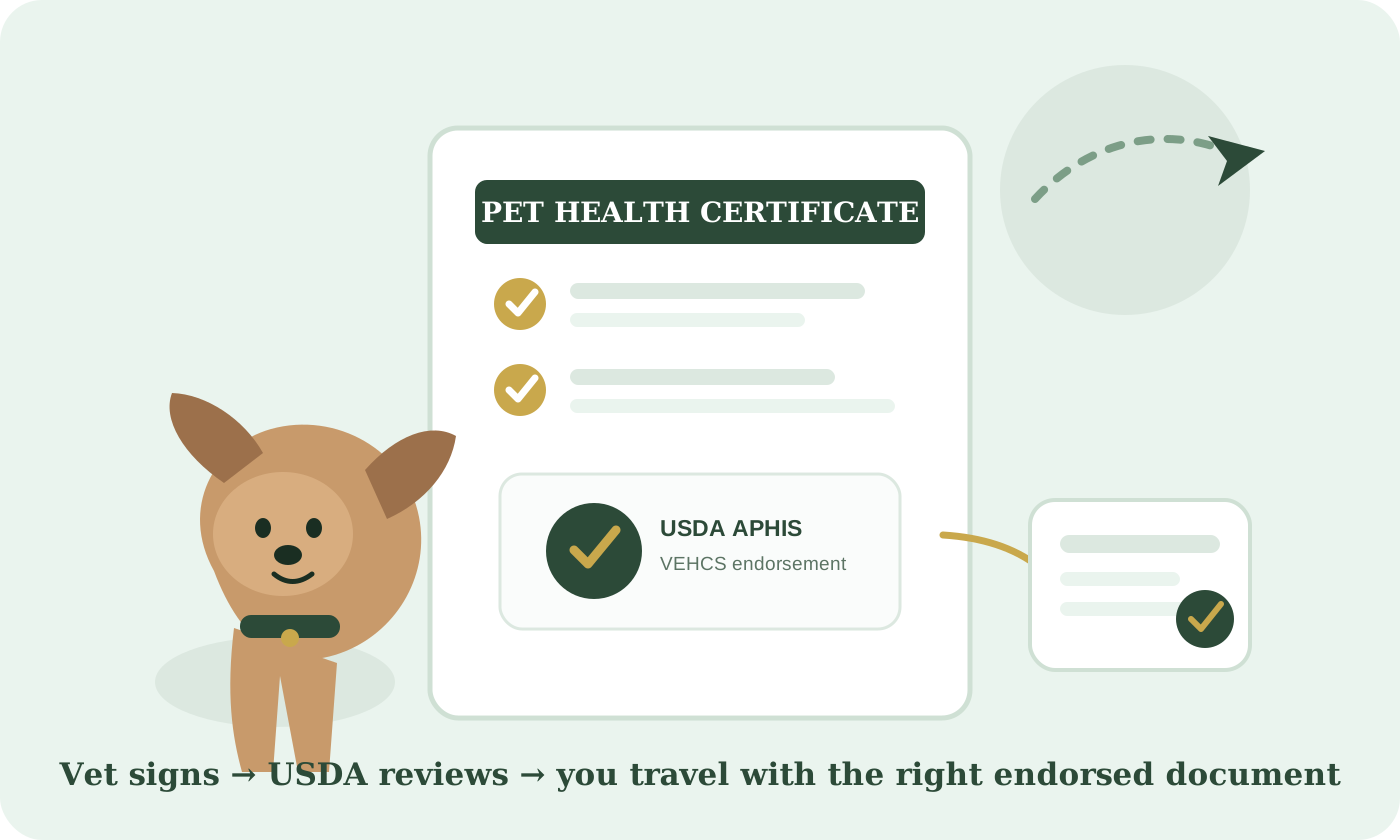
The short version
- First, confirm whether your destination actually requires USDA endorsement.
- A USDA-accredited veterinarian issues the international health certificate.
- For fastest processing, USDA currently recommends that the accredited veterinarian submit through VEHCS.
- USDA reviews the certificate and supporting documents before endorsing it.
- The final document format depends on the destination: some accept digital endorsement workflows, while others still require a physically endorsed paper certificate returned by mail.
Direct answer: VEHCS—the Veterinary Export Health Certification System—is USDA APHIS's secure electronic system for creating, issuing, submitting and endorsing health certificates for international animal travel. Pet owners usually experience VEHCS indirectly: the USDA-accredited veterinarian submits the signed certificate and supporting records to APHIS, then tracks the endorsement status.
That distinction matters because “the vet signed it” and “the certificate is ready for international travel” can be two different moments.
When is USDA endorsement required?
Not every destination requires it. The destination country's current import rules determine whether a health certificate needs USDA APHIS endorsement, what certificate must be used and how close to travel it must be issued.
USDA instructs accredited veterinarians to use the correct, current destination-specific certificate and to confirm that the animal meets the destination's requirements before issuing it. If your destination does not require USDA endorsement, adding an endorsement step does not make the paperwork “more official” in a useful way—it simply adds a step the destination did not ask for.
How the VEHCS endorsement process works
- Confirm the destination requirements.
Your accredited veterinarian reviews the destination's current rules, including identification, vaccinations, testing, treatments, permits and certificate timing. - The veterinarian issues the health certificate.
The certificate must be accurate, complete and issued within the destination's required timeframe. - The certificate and supporting documents go to USDA.
USDA says the fastest route is for the accredited veterinarian to submit through VEHCS. Required supporting documents can include vaccination certificates, laboratory results and an import permit, depending on the destination. - APHIS reviews the submission.
Incomplete or incorrect information can delay endorsement while the veterinarian or owner/exporter resolves the problem. - The endorsed certificate is returned in the form the destination accepts.
Some destinations allow the endorsement process to be completed electronically. For destinations that still require a physical ink-signed and embossed certificate, the certificate is physically endorsed and returned.
Free to start — organize your pet's travel records →
Does the pet owner log in to VEHCS?
Usually, the practical answer is no. USDA describes VEHCS as the system accredited veterinarians use to issue and submit export health certificates. An exporter may have roles in the system in some export workflows, but for ordinary pet travel the accredited veterinarian is the key person who submits the certificate and can check its status.
USDA's current endorsement-office guidance also tells pet owners seeking a status update to contact their accredited veterinarian because the veterinarian can view VEHCS status.
Digital endorsement vs. a paper certificate
VEHCS does not mean every traveler receives a purely digital document. USDA says all live-animal export health certificates can be issued electronically in VEHCS, but the way USDA endorsement is returned depends on what the destination accepts.
| Workflow | What happens | What the owner should plan for |
|---|---|---|
| Destination accepts digital endorsement | USDA can endorse the certificate through VEHCS and return the completed certificate electronically. | Confirm what must be printed or carried for entry; destination instructions control. |
| Destination requires physical endorsement | USDA prints the VEHCS submission, physically endorses it, then returns it using the required delivery process. | Build shipping time into the travel timeline and make sure the required return label is included. |
The important point is not to assume “electronic submission” means “no paper at the border.” Follow the destination's current instructions for the final certificate that must accompany the pet.
What causes USDA endorsement delays?
USDA repeatedly points to completeness and accuracy. Common delay risks include missing supporting records, incorrect information on the certificate, a mismatch between the certificate and the pet's underlying records, or a submission made without the required permit or test result.
USDA's endorsement office also warns that endorsements can take several business days and may be completed close to departure. There are no in-person or drop-off endorsement services under the current office guidance, and routine VEHCS processing is staffed Monday through Friday, excluding federal holidays.
A better way to prepare for endorsement
The endorsement stage is easiest when the travel file was built correctly before the health-certificate appointment. Keep these items together and verify that names, dates and identification details match:
- Destination and exact travel date
- Rabies and other destination-required vaccination records
- Microchip number and identification record, if required
- Laboratory test results, if required
- Treatment records, if required
- Destination-issued import permit, if required
- Correct destination-specific health certificate
- Return-shipping information when physical endorsement is required
For a deeper appointment checklist, see what to bring to a USDA-accredited veterinarian for international pet travel. If you are still sorting out the basic document types, start with Pet Health Certificates Explained.
VEHCS does not replace destination research
VEHCS is a certification and endorsement system. It does not create one universal rule for international pet travel. The destination still decides which vaccinations, tests, treatments, permits, timelines and certificate formats are required.
This is also why the airline should not be used as the source for a country's entry requirements. The airline can tell you its own carriage and boarding rules. Country entry requirements should come from the responsible government authority, with USDA APHIS helping explain the U.S. export certification process.
Quick questions
What does USDA “endorsement” mean on a pet health certificate?
It is APHIS review and official endorsement of the destination-specific export health certificate when the destination requires that government verification. It happens after the USDA-accredited veterinarian issues the certificate.
Is VEHCS required for every international pet trip?
No. The destination's requirements determine whether USDA endorsement is needed. VEHCS is USDA's electronic system for export health certificates and is the preferred submission route for endorsement, but not every destination requires an endorsed certificate.
How long does USDA endorsement take?
USDA does not promise one universal turnaround time. Current APHIS guidance says endorsements may take several business days and can be completed close to departure. Incomplete paperwork can add delays, so plan around the destination's certificate-validity window rather than assuming same-day processing.
Can I take the certificate to a USDA office in person?
Current APHIS endorsement-office guidance says there are no in-person or drop-off services. USDA recommends veterinarian submission through VEHCS for fastest processing.
How do I check the status?
USDA advises pet owners to contact the accredited veterinarian, who can check the certificate's status in VEHCS.
Does a digital USDA endorsement mean I can travel with only my phone?
Do not assume that. The destination determines what final document must accompany the pet. Some destinations accept digitally endorsed workflows but still require a printed copy; others require a physically endorsed original.
Primary sources used
This guide was checked against current USDA Animal and Plant Health Inspection Service guidance on September 9, 2026.
Build the travel file before the deadline starts
One app for every trip and every vet visit. Keep your pet's vaccine history, health records and travel documents organized in YourPetPass so the information behind the certificate is ready when your accredited veterinarian needs it.
Create Your Free YourPetPass Account