
Pet Travel · Document Check
Wrong Microchip Number on a Pet Rabies Certificate? What to Do Before Travel
One transposed digit can turn a familiar vaccination record into a travel-document problem. Check the chip itself against every supporting record before your veterinarian prepares the final certificate.
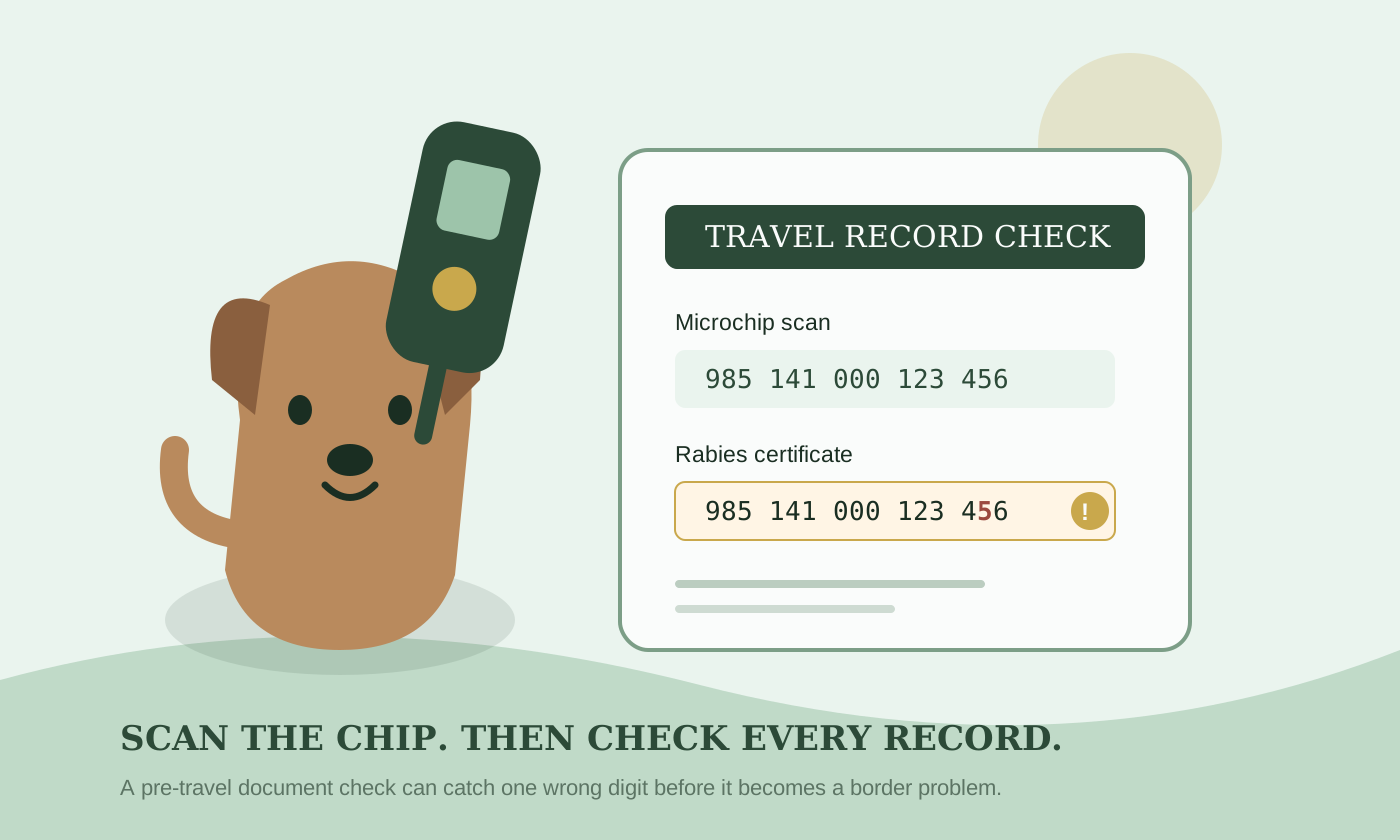
The short answer
- Scan the pet first. Treat the number read from the pet's microchip as the number that must be reconciled with the paperwork.
- Compare that number character-by-character with the rabies certificate, laboratory reports, import permit and travel health certificate that apply to your route.
- Do not edit, overwrite or recreate an official veterinary record yourself. Contact the veterinarian who issued the record and the veterinarian preparing the travel certificate.
- Do not assume a one-digit typo is harmless. Some destinations expressly require the microchip number on supporting records to match the animal and travel certificate.
- If the mismatch raises a question about whether the pet was identified before the rabies vaccination, resolve it before relying on that vaccination for travel.
Direct answer: if the microchip number on your pet's rabies certificate does not match the chip that scans from your pet, stop the document-preparation process and have the discrepancy reviewed by the issuing veterinarian before travel. The correct next step depends on the destination, the underlying veterinary record and whether the problem is a documentation error or an identification/timing problem.
This is more than cosmetic paperwork. For travel to the European Union, the rabies vaccination used for travel cannot precede the pet's microchip identification or reading. The EU health certificate also documents the microchip code and rabies-vaccination details. Great Britain requires the vaccination record to include the microchip number and warns that incorrect travel-document details can stop travel. Barbados goes further: its published requirements say the identification number on the certificate should be identical to the number found on the animal, and supporting rabies and laboratory records should carry the microchip number.
First determine what kind of mismatch you have
| What you find | Why it matters | Best next action |
|---|---|---|
| One record has a likely typo | The pet scans consistently, but one document differs. | Ask the issuing veterinarian to review the original medical record and advise how the record can properly be corrected or documented. |
| Several records show a different number | This may be more than a transcription error. | Have the veterinarian reconcile the scanned chip with the historical record before preparing travel paperwork. |
| The chip will not read | The pet's identity may not be verifiable at inspection. | Do not guess the number. Follow the destination's unreadable-chip rules with your veterinarian. |
| A second chip was implanted | Both chip identities and their dates may matter. | Make sure the veterinarian knows the complete chip history and follows the destination's documentation rules. |
| The mismatch changes the apparent microchip/rabies sequence | Some destinations require identification before the rabies vaccination relied on for travel. | Treat this as a timing/eligibility question, not merely a typo. Verify the route-specific rule before booking around the old vaccination. |
A five-document microchip audit
Before the final health-certificate appointment, scan the pet and compare the resulting number with every document that will support the trip. Depending on the destination, that may include:
- Rabies vaccination certificate. Check every digit against the scanned chip.
- Rabies antibody laboratory report. If your route requires a titer, confirm the identifier on the report.
- Import permit. If the destination issued a permit containing the pet's identifier, compare it too.
- Draft or final health certificate. Make sure the veterinarian is using the reconciled identifier.
- Other official travel records. Check any destination-specific forms that identify the animal by microchip.
Free to start — organize your pet's travel records →
Why a mismatch can affect whether a rabies vaccination counts
For EU non-commercial pet travel, the European Commission states that the date of rabies vaccination must not come before the date the animal was identified or the microchip was read. That makes the identity-and-date chain important: the paperwork needs to support that the vaccination belongs to the identified animal and satisfies the required sequence.
Great Britain's outbound pet-travel guidance similarly requires microchipping before, or at the same time as, rabies vaccination. Its vaccination-record rules require the microchip number plus the date the chip was implanted or read.
Destination examples: why exact identifiers matter
European Union
For dogs, cats and ferrets entering the EU from a non-EU country, the European Commission requires microchip identification and a qualifying rabies vaccination. The animal health certificate documents the alphanumeric microchip code along with the rabies-vaccination details. The rabies vaccination used for travel must not precede identification or reading of the chip.
Great Britain
Great Britain's official guidance requires the vaccination record to show the microchip number and relevant chip date. USDA APHIS guidance for U.S.-origin pets going to Great Britain states that the correct microchip number on the rabies vaccination certificate must match the health certificate and warns that a mismatch can result in quarantine at the owner's expense.
Barbados
USDA APHIS's destination page for Barbados says the identification number on the certificate should be identical to the number found on the animal and that supporting rabies-vaccination and laboratory certificates should bear the microchip number. The certifying veterinarian must be able to verify the chip before signing the certificate.
These examples are not a universal correction procedure. They show why a traveler should resolve an identifier discrepancy against the rules for the actual destination rather than assuming all countries handle a typo the same way.
What not to do
- Do not manually alter a veterinarian-issued rabies certificate.
- Do not copy the number from an old document into a new form without scanning the pet.
- Do not assume the longest-standing number in your files is automatically the current chip.
- Do not wait until airport or border inspection to discover whether the records match.
- Do not assume another country's correction or rechipping procedure applies to your destination.
If the microchip cannot be read
An unreadable chip is a different problem from a typo. Great Britain's official guidance, for example, says that if a veterinarian cannot read the chip, the pet may need to be rechipped, revaccinated and issued new travel documentation, with required waiting periods starting again where applicable. If a chip reads only intermittently, Great Britain provides a process for recording both old and new chips.
Use that as a reminder to test the chip before a time-sensitive certificate appointment. For any other destination, verify its own procedure rather than importing Great Britain's rules.
A practical pre-travel workflow
- Scan the pet at the veterinary clinic.
- Write down the scanned number exactly.
- Compare every supporting record character-by-character.
- Flag every discrepancy before the health certificate is prepared.
- Ask the issuing veterinarian to reconcile questionable historical records.
- Check the destination authority's current requirements.
- Confirm the final travel certificate uses the reconciled identifier.
- Keep the supporting records accessible during travel.
FAQ
Is one wrong digit on a rabies certificate really a problem?
It can be. Some destination rules expressly connect the animal's microchip number to the vaccination and health-certificate records. Resolve the discrepancy with the issuing veterinarian rather than assuming an inspector will overlook it.
Can I correct the microchip number on the certificate myself?
Do not alter an official veterinary record yourself. Ask the veterinarian who issued the record how the underlying record and any required correction should be handled.
Should the veterinarian scan the chip before completing travel paperwork?
Yes, scanning before the final paperwork is a practical way to verify the identifier being placed on the travel certificate. Some destination requirements expressly require verification of the microchip.
What if my pet has two microchips?
Tell the veterinarian preparing the travel documents about both chips and their history. How they must be recorded depends on the destination and circumstances; do not hide or arbitrarily choose one identifier.
What if the chip number is correct but the implantation date is wrong?
That can matter when the destination ties rabies-vaccination validity to the identification date. Have the veterinarian review the original record and verify the destination's current rule before relying on the vaccination.
Primary official sources
- European Commission — Bringing a pet into the EU from a non-EU country
- GOV.UK — Rabies vaccinations and boosters
- GOV.UK — Microchip rules for taking a pet abroad
- USDA APHIS — U.S. pet travel to Great Britain
- USDA APHIS — U.S. pet travel to Barbados
Official sources reviewed September 16, 2026. Requirements can change. Verify the current rules for your pet, origin, destination and route before travel.
Catch record problems before they become travel problems.
Your pet's health history belongs with you. Keep vaccination records, test results and travel documents organized around the same pet so you can compare the details before the final appointment.
Start YourPetPass free →