
Pet Travel
Mistake on a USDA-Endorsed Pet Health Certificate? What to Do Next
The right fix depends on when you catch the error. Once USDA has endorsed an international health certificate, editing the document yourself is not the solution.
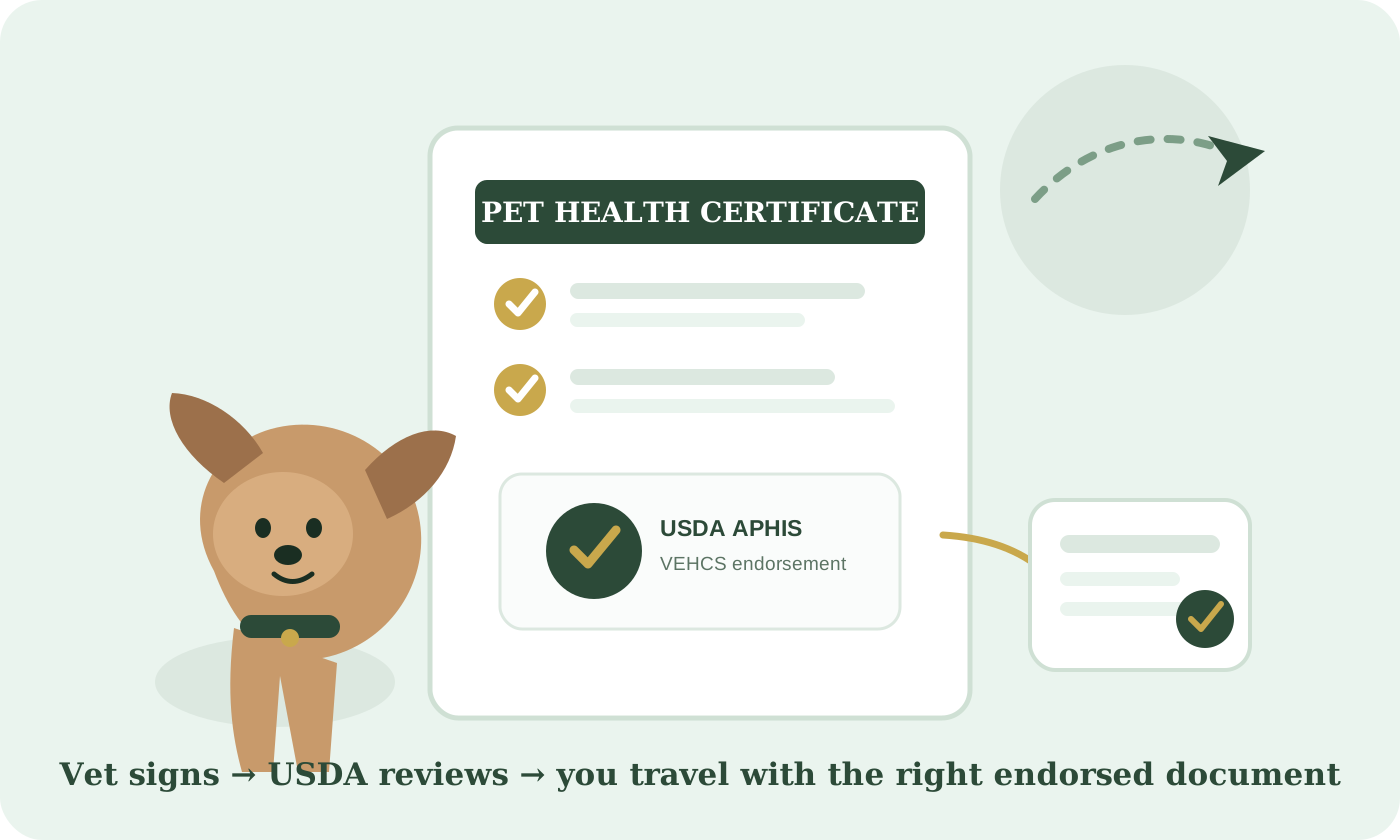
The short answer
- If the certificate has been submitted but not endorsed: have your USDA-accredited veterinarian contact the USDA Endorsement Office immediately. USDA says a submission may be returned in VEHCS for correction before review is completed.
- If USDA has already endorsed it: do not alter the endorsed certificate. USDA's VEHCS training says information that must change after endorsement requires the certificate to be reissued; additional endorsement fees may apply.
- Do not assume every typo is harmless. Animal identification, microchip, vaccination, testing, treatment and owner/export details can be material because the certificate must match the supporting records and destination requirements.
- Recheck the travel clock. Reissuing paperwork does not necessarily reset or extend the destination country's examination, treatment, certificate or arrival windows.
Direct answer: if you discover an error on a U.S. international pet health certificate, first determine whether USDA APHIS has endorsed it. Before endorsement, the veterinarian may be able to correct a returned VEHCS submission. After endorsement, USDA instructs users not to make corrections to the endorsed certificate; when information must change, the certificate may need to be reissued through VEHCS. Contact the accredited veterinarian and USDA Endorsement Office rather than editing the official document.
The decision point: where is your certificate right now?
| Status | What USDA guidance indicates | Your next move |
|---|---|---|
| Not yet submitted | The accredited veterinarian should verify the certificate against records and destination rules before issuance. | Correct the underlying entry through the veterinarian before submission. |
| Submitted in VEHCS, not endorsed | If you notice an error after submission, USDA says to contact the Endorsement Office immediately; if possible, it can return the submission for correction. | Have the veterinarian act quickly and use the VEHCS tracking number. |
| Returned by USDA | USDA can return a certificate when a correction is needed; APHIS says it cannot make changes to electronically submitted documents for you. | The veterinarian corrects and resubmits the certificate. |
| Already endorsed | USDA VEHCS training states corrections cannot be made to an endorsed certificate; information changes may require reissuance. | Contact the veterinarian and Endorsement Office about reissuing. Do not hand-edit the endorsed document. |
Errors that deserve immediate attention
USDA tells accredited veterinarians to make sure the animal's description, identification, vaccination, testing and treatments match the medical records and supporting documentation exactly. That makes discrepancies in these fields especially important to escalate.
A formatting rule can also matter when the destination specifies one. Mexico, for example, currently tells U.S. travelers that its health certificate must be typewritten/computer-completed and will not accept handmade corrections, erasures, lineouts or crossouts. That is a destination-specific requirement, not a universal correction rule.
Free to start — organize your pet's travel records →
A six-step correction workflow
- Stop editing. Do not write over, white-out, cross out or otherwise alter an endorsed certificate yourself.
- Identify the exact mismatch. Compare the certificate field with the underlying veterinary record, vaccine certificate, microchip documentation, laboratory report or import permit.
- Confirm certificate status. Is it still with the veterinarian, submitted in VEHCS, returned for correction, or already endorsed?
- Contact the USDA-accredited veterinarian. For VEHCS submissions, the veterinarian is normally the person who can correct/resubmit or initiate the reissue process.
- Escalate to the USDA Endorsement Office when needed. USDA specifically recommends contacting the office about the reason for reissuing an endorsed certificate, particularly if the animal is already being held in another country.
- Recalculate every deadline. Verify that the corrected/reissued certificate, examination, treatments, tests, permits and new arrival date still satisfy the destination's current rules.
Why timing becomes the second problem
A document correction can consume time inside an already narrow travel window. USDA APHIS notes that incomplete or incorrect health certificates delay endorsement, and that once an accredited veterinarian signs a certificate, the destination may allow only a limited period for endorsement and travel.
So a successful correction does not automatically mean the trip is ready. After the certificate is returned or reissued, check the destination's current government requirements again. If a timed examination, parasite treatment or certificate-validity window has moved outside the permitted range, another step may need to be repeated.
What not to do
- Do not alter a USDA-endorsed certificate yourself.
- Do not create a replacement PDF or scan that makes an altered document look original.
- Do not assume a small identification mismatch is automatically acceptable at the border.
- Do not ask an airline to decide whether a country's legal entry certificate is valid; use the destination authority and USDA process for country-entry documentation.
- Do not discard the superseded certificate or supporting records unless your veterinarian/USDA process instructs you to; keep the document trail organized.
FAQ
Can I correct a USDA-endorsed pet health certificate by hand?
No. USDA VEHCS training says corrections cannot be made to an endorsed health certificate. If information needs to change after endorsement, the certificate may be reissued in VEHCS. Contact your accredited veterinarian and USDA Endorsement Office.
What if I catch the mistake before USDA endorses it?
Act immediately. USDA says that if an error is noticed after VEHCS submission, the Endorsement Office may be able to return it for correction before review is completed. USDA may also return a submission when its review finds an error.
Will USDA fix the electronic certificate for my veterinarian?
USDA's VEHCS training states APHIS is unable to make changes to electronically submitted documents. The submission is returned so the appropriate correction can be made and resubmitted.
Will I have to pay another endorsement fee?
Possibly. USDA's VEHCS training says endorsement fees may apply when an endorsed certificate is reissued.
Does reissuing the certificate give me a new travel window?
Do not assume that it does. The destination country defines the applicable timing rules, and other requirements—such as examinations, treatments or tests—may have clocks independent of certificate reissuance.
Primary sources
- USDA APHIS — VEHCS step-by-step guide
- USDA APHIS — Accredited Veterinarians: Certifying Pets To Travel
- USDA APHIS — Pet Travel Process Overview
- USDA APHIS — Working With an APHIS Endorsement Office
- USDA APHIS — Pet Travel From the United States to Mexico
Official sources reviewed September 21, 2026. International pet-travel requirements can change. Verify the current requirements for your destination, species and itinerary before travel.
Make the corrected document easier to verify.
Keep the certificate beside the vaccination, microchip, test and treatment records it is supposed to match. One app for every trip and every vet visit. Your pet's health history belongs with you.
Start YourPetPass free →