
Pet Health Records
Pet Medical Records Transfer Checklist
Changing vets or seeing a specialist? Request the complete history, check what arrived, and confirm your new clinic can open it before the appointment.
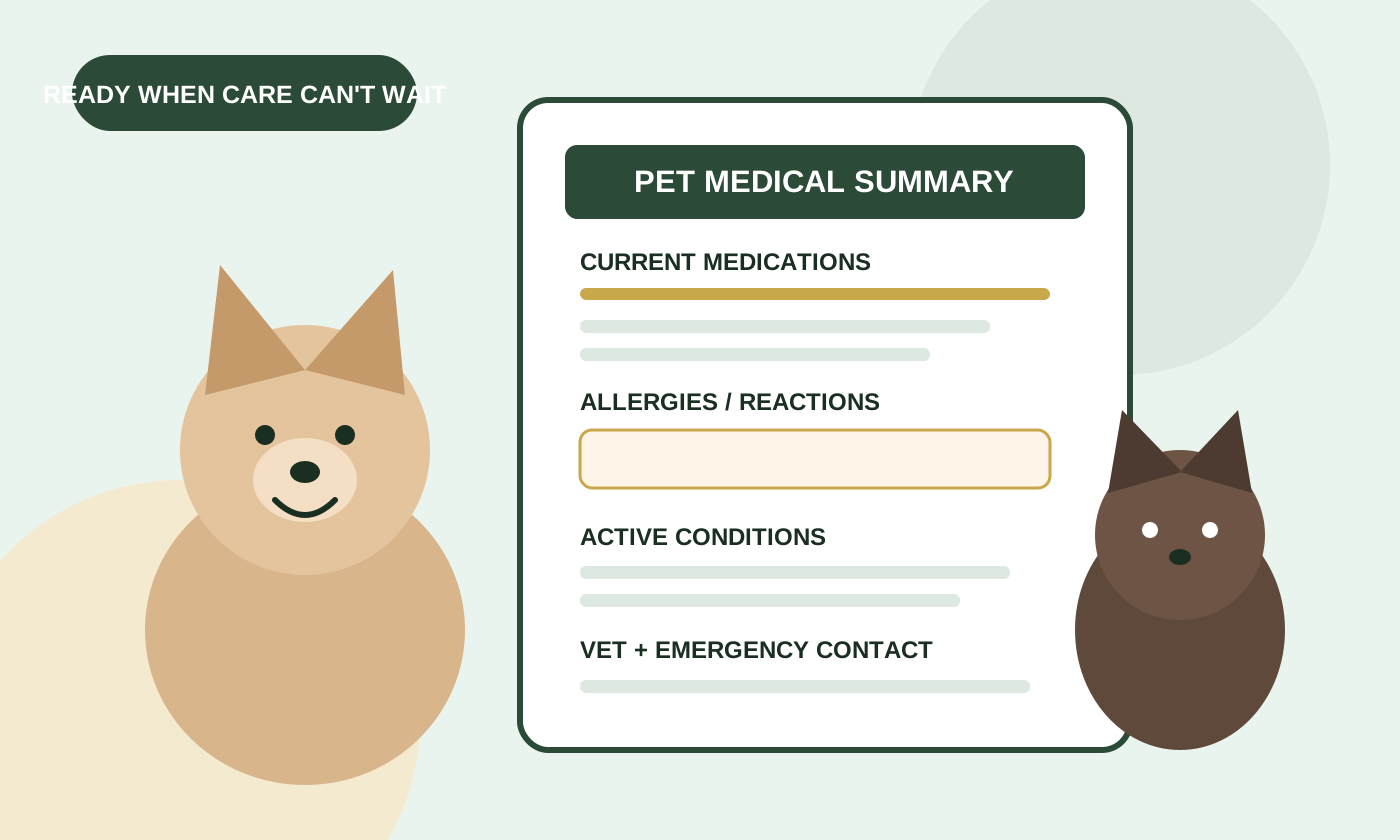
A transfer is complete when the receiving clinic has usable records
“Sent” is only the first step. Ask the new clinic to confirm receipt, readable attachments and any missing items. Keep your own copy so your pet’s history stays with you.
1. Gather the details before you request records
- Your name and contact details as held by the previous clinic.
- Your pet’s name and identifying details, including any previous name.
- The receiving clinic’s verified contact information and preferred transfer method.
- The appointment date and reason for the transfer, such as a move or referral.
- The date range needed, and every clinic, emergency hospital or specialist that holds part of the history.
2. Ask for the clinical record and attachments
Request consultation notes, vaccination certificates, laboratory results, medication history, procedure reports and discharge instructions. Ask whether imaging files and specialist reports need a separate transfer. A vaccination summary or invoice alone may leave out information the next veterinarian needs.
Ask the practice whether you need a signed release. AAHA’s records-transfer guidance notes that rules vary by state and recommends signed transfer forms. Confirm local requirements, fees and timing directly with the clinic.
3. Use a clear request
You can adapt this wording and send it through the clinic’s usual channel:
Please send a copy of the complete medical record for [pet name and identifying details], covering [date range], to [new clinic and verified contact]. Our appointment is [date].

Please include consultation notes, vaccination certificates, laboratory and imaging reports, procedure records, medication history and discharge instructions. Let me know how original imaging files can be transferred if needed.

Please also provide a copy for my own records and tell me if you need a signed release, if a fee applies, or if any documents must be requested elsewhere.
4. Check the files you receive
- Do they belong to the correct pet?
- Do the dates cover the period requested?
- Can you open every attachment, and are scanned pages legible?
- Are the mentioned lab reports, images and specialist letters actually attached or accessible?
- Are current instructions distinguishable from older or discontinued instructions?
- Have you identified missing records without changing the original documents?
5. Close the loop with the new clinic
Confirm receipt before the appointment where possible. Ask whether the veterinarian needs anything else or wants direct contact with the prior practice. The AVMA recommends transferring copies when changing practices so the new team has the history.
Bring your own copies and a current medication list. Tell the team about any recent change that happened after the records were sent. Never postpone urgent care just because a transfer is incomplete.
What if records are missing?
Follow up with the specific clinic that created the document. State what is missing and when it is needed. Keep a simple log of the request date, contact person and next follow-up. If a practice has closed, ask where its records were transferred and consult the relevant veterinary regulator for local guidance.
Do not recreate a vaccination certificate or guess an uncertain result. Mark the gap and let the veterinarian decide how to proceed.
Sources checked October 18, 2026
This checklist helps you organize a transfer. It does not establish a universal legal deadline, ownership rule or free-copy entitlement.
Keep your copy after the handoff.
Store the documents you receive in YourPetPass so the next move or vet visit starts with an organized history.
Free to start at YourPetPass.com