
Pet Health Records
Pet Medication List: What to Track for Every Vet Visit
“What medications is your pet taking?” should not turn into a memory test. A current medication list gives every veterinary team the same, precise answer.
The short answer
- Keep one current list of every product your pet is actually receiving: prescriptions, over-the-counter medicines and supplements.
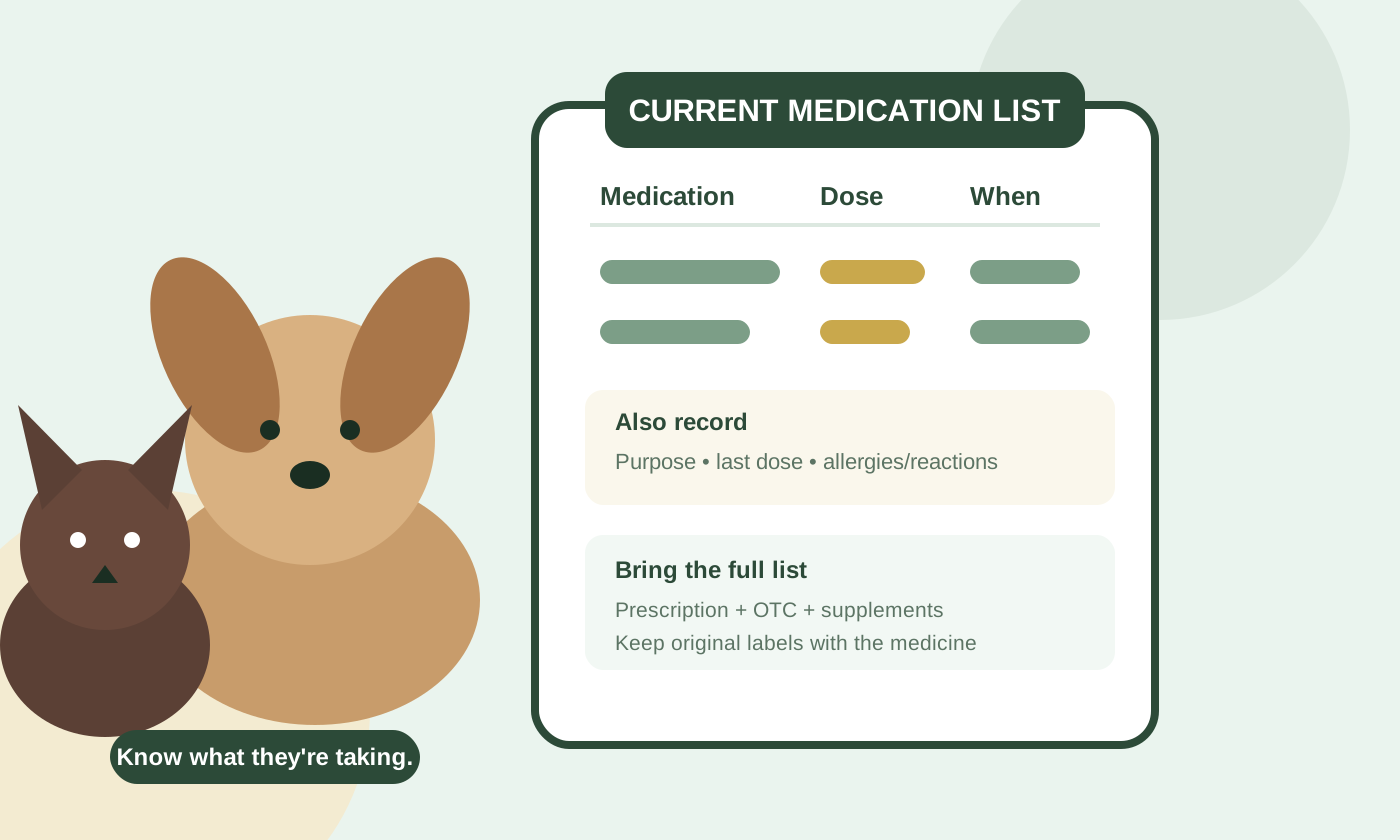
- For each medication, record the exact name, strength or concentration, amount given, frequency, route when relevant, purpose and prescribing veterinarian.
- Record known medication allergies and prior drug problems separately from the active medication list.
- Bring the list to every veterinary visit—especially a new clinic, specialist or emergency hospital—and update it whenever the regimen changes.
- Keep medicines in their original labeled containers and never guess at a dose from memory.
Direct answer: a useful pet medication list should tell a veterinarian what your pet takes, exactly how much, how often, why, and when it was last given when timing matters. It should include prescription drugs, over-the-counter products and supplements, plus a separate record of medication allergies or previous adverse reactions.
The U.S. Food and Drug Administration specifically advises pet owners to keep a list of all drugs an animal is taking—including OTC products, supplements and prescriptions—and show it to the veterinarian. FDA also recommends discussing medication allergies, prior drug problems and serious or chronic health conditions.
What should be on a pet medication list?
| Field | What to record | Why it matters |
|---|---|---|
| Medication | Exact drug or product name | Avoids vague descriptions such as “the heart pill.” |
| Strength | For example, the tablet strength or liquid concentration shown on the label | The same drug may come in multiple strengths. |
| Amount | The amount you actually give each time | Separates package strength from the prescribed dose. |
| Frequency | How often it is given and relevant timing instructions | Helps reconstruct the current regimen accurately. |
| Route | By mouth, eye, ear, skin or other route when useful | Clarifies how the medication is administered. |
| Purpose | Why your pet receives it | Helps another clinician understand the treatment context. |
| Prescriber | Regular vet or specialist who manages it | Provides a source for questions or records. |
| Last dose | Date/time when clinically relevant or during an emergency | Can help a treating team understand recent administration. |
Include OTC products and supplements, too
Owners often think “medication” means prescription medicine only. FDA guidance is broader: the list should include over-the-counter products and supplements as well as prescription drugs.
That means your list should capture products you give routinely even if they did not come from the veterinary pharmacy. The goal is not to decide on your own whether a product is medically important. The goal is to give the veterinarian an accurate inventory so the clinician can decide what is relevant.
Free to start — organize your pet's health history →
Keep allergies and previous drug problems separate
A current medication and a prior medication problem answer different questions. FDA tells owners to discuss drugs an animal is allergic to or that caused problems in the past. Put those reactions in a clearly labeled section rather than burying them among inactive prescriptions.
When you know what happened, record the reaction in plain language. “Vomited after each dose” communicates more than simply writing “allergy” if an allergy was never diagnosed. Do not reinterpret an old event medically; record what you know and let the veterinary team evaluate it.
Medication safety details worth keeping with the list
FDA says medication errors can happen at veterinary clinics, pharmacies and at home. Its owner guidance emphasizes asking what a drug is for, how much to give, how often to give it, whether food matters, what side effects to watch for, what to do after a missed dose and how to store the medication.
- Keep each pet's medications in their original labeled containers.
- Store animal medicines separately from human medicines to reduce mix-ups.
- Do not cut, crush or break tablets or capsules unless your veterinarian instructs you to do so.
- Do not share one animal's medication with another unless a veterinarian directs it.
- Do not give a human medication to a pet unless directed by a veterinarian.
For some FDA-approved animal drugs, a veterinarian may provide a Client Information Sheet. FDA describes these as owner-focused handouts explaining the drug, expected effects, possible side effects and special dosing or handling precautions. Keep that sheet with the medication's supporting records when one is provided.
A five-minute medication reconciliation before a vet visit
- Gather the containers. Put every prescription, OTC product and supplement your pet currently receives in one place.
- Read the labels. Compare the name, strength, directions and prescriber against your list.
- Mark changes. Remove discontinued products from the active section rather than leaving the veterinarian to guess whether they are still being given.
- Check reactions. Make sure allergies and previous drug problems are visible and not mixed into ordinary medication history.
- Bring the list. Have it accessible on your phone or on paper, especially when visiting a clinic that does not already hold the complete record.
What if your pet takes medication only as needed?
Keep it on the list if it remains part of the veterinarian-directed regimen. Mark it clearly as “as needed” and preserve the actual instructions from the veterinarian. If an emergency visit follows a recent dose, tell the treating team when and how much was given.
What if you cannot remember the dose?
Do not estimate. Check the current prescription label or contact the prescribing veterinarian or dispensing pharmacy. FDA's medication-error guidance repeatedly emphasizes clear communication and accurate directions because small notation or interpretation errors can produce substantial dosing mistakes.
When should you update the list?
Update it whenever a drug is started, stopped, changed in strength, changed in amount or frequency, or when a new reaction is identified. Also update it after a specialist changes a regimen so the regular veterinarian and other caregivers are not working from an older version.
A quick reconciliation before routine appointments is a good backstop. For pets with several medications or multiple veterinary specialists, checking the list against the actual containers is more reliable than checking it against memory.
FAQ
Should vitamins and supplements be on my pet's medication list?
Yes. FDA specifically advises owners to include supplements and over-the-counter products along with prescription drugs.
Should flea, tick or heartworm products be listed?
If your pet is receiving a medication or preventive product, include it in the inventory you show the veterinarian. Let the veterinary team determine its relevance to the visit.
Do I need the prescribing veterinarian's name?
It is useful, particularly when specialists manage different conditions. It gives another veterinary team a clear source for questions or supporting records.
Should I keep old medications on the list?
Do not leave discontinued products mixed into the active list. Keep prior medication history in the underlying record when useful, but clearly distinguish what your pet is taking now.
Can I take medications out of their bottles to make travel easier?
FDA recommends keeping animal drugs in their original labeled containers. Separate storage also helps reduce mix-ups with human or other pets' medicines.
What should I do if my pet has a bad reaction to a medication?
Contact your veterinarian immediately. If your veterinarian is unavailable and the situation is urgent, contact a local emergency animal hospital. FDA also provides pathways for reporting animal-drug adverse events and product problems.
Primary sources
- FDA — Veterinary Medication Errors
- FDA — Medication Errors Happen to Pets, Too
- FDA — Client Information Sheets: Take-Home Safety Knowledge
- FDA — Properly Store Medications to Keep Your Pet Safe
- FDA — How to Report Animal Drug and Device Side Effects and Product Problems
Official sources reviewed September 16, 2026. This guide is for record organization and owner education, not diagnosis, dosing or treatment advice.
Your pet's health history belongs with you.
Keep medications, allergies, vaccines, vet visits and important documents organized before the next clinic asks for them. One app for every trip and every vet visit.
Start YourPetPass free →